Columbia Spire Valley Windbreaker: Honest Review 2025
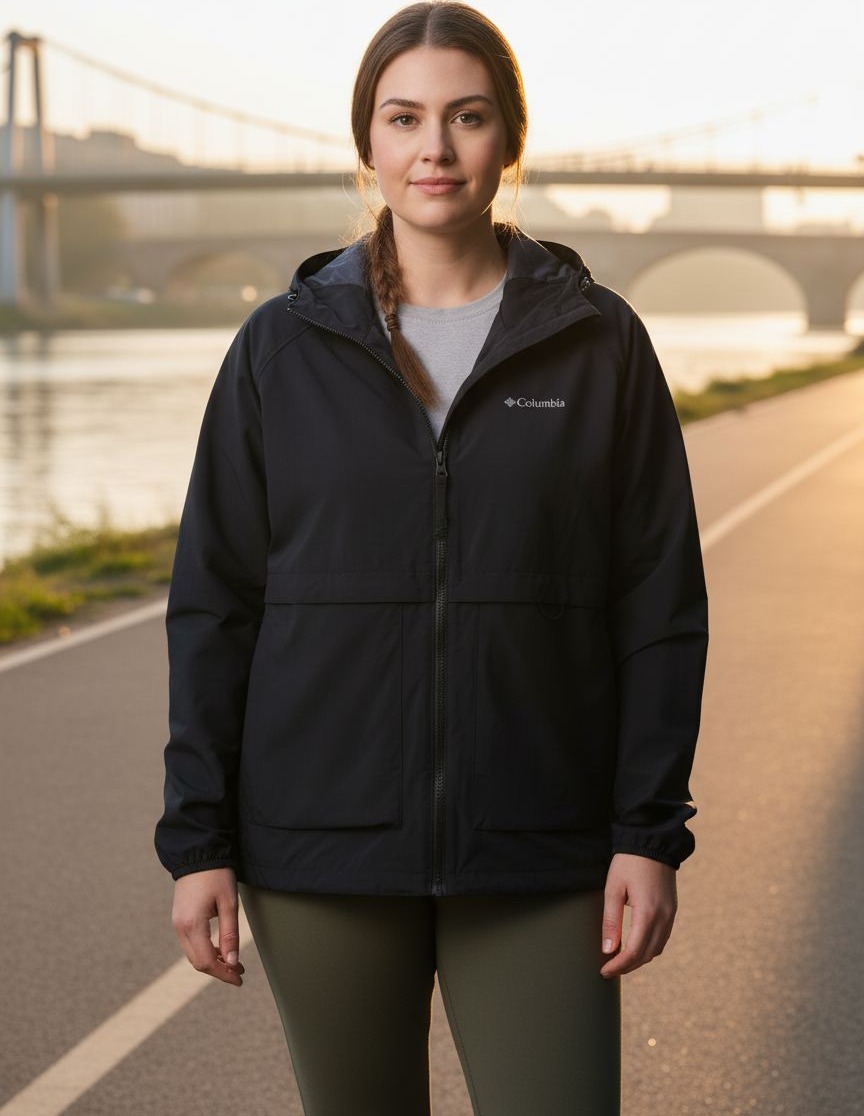
The Columbia Spire Valley™ Windbreaker showed up on a Tuesday when the forecast read “breezy and 48 degrees,” and by mile three of a trail loop I’d already stopped thinking about it — which turned out to be the highest compliment I could give.
The trail smelled like wet bark and last night’s rain when I pushed out the door at 6:45 a.m., the kind of morning where your breath fogs up and your fingers remind you they exist. I had the Columbia Spire Valley™ Windbreaker zipped to the collar, gloves stuffed in the kangaroo pocket, and absolutely no idea if this thing was going to perform or just flap around like a grocery bag in the wind. By the time I crested the first climb and hit the exposed ridge, the jacket had already done something remarkable: it had disappeared. Not literally, obviously. But that sensation of gear becoming invisible mid-session, where you stop adjusting and tugging and start just running, that happened fast.
The First Time I Wore It
I came across the Spire Valley while deep in a rabbit hole of outdoor gear roundups on Outside Online, cross-referencing what journalists and editors were actually putting on their bodies for shoulder-season trail runs. Columbia kept surfacing. Not as a flashy pick, but as the quiet, dependable one — the jacket that shows up and does its job without demanding attention. I’d had mixed feelings about Columbia’s more fashion-forward pieces in the past, so I went in with measured expectations.
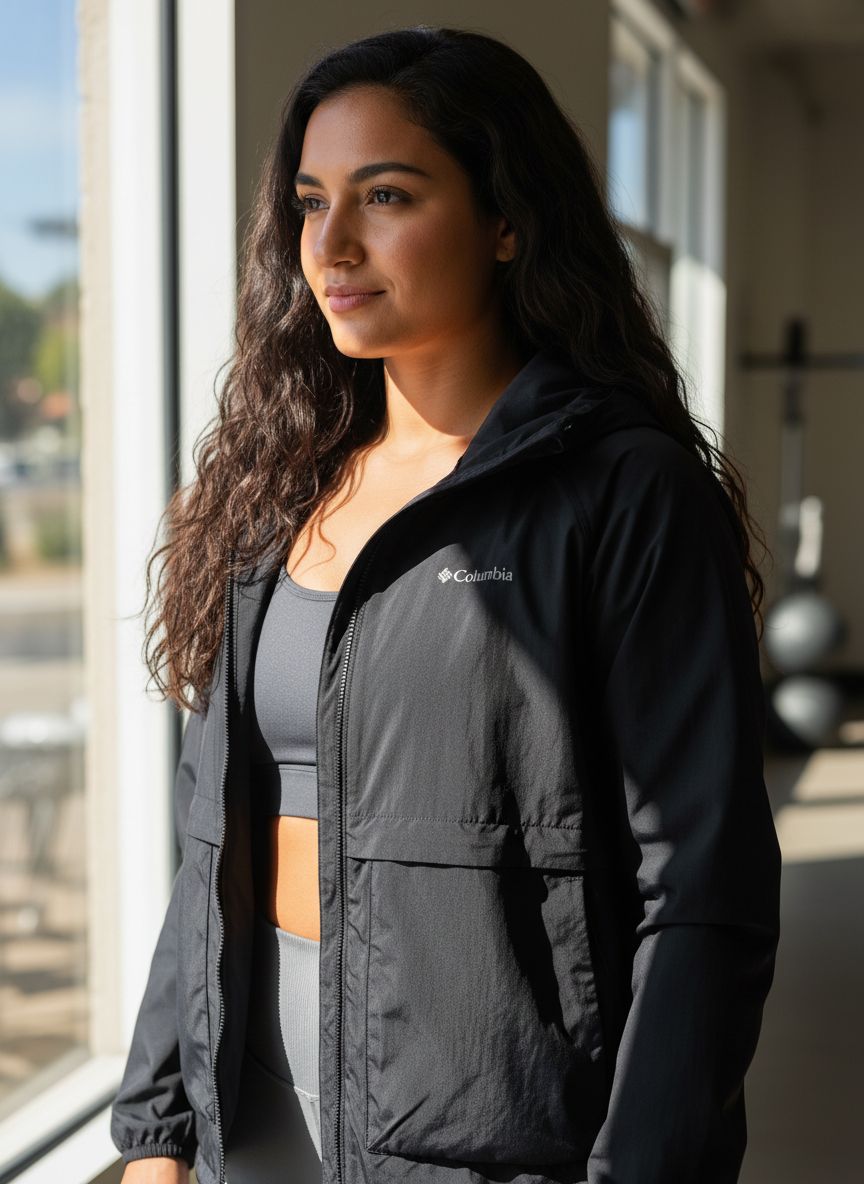
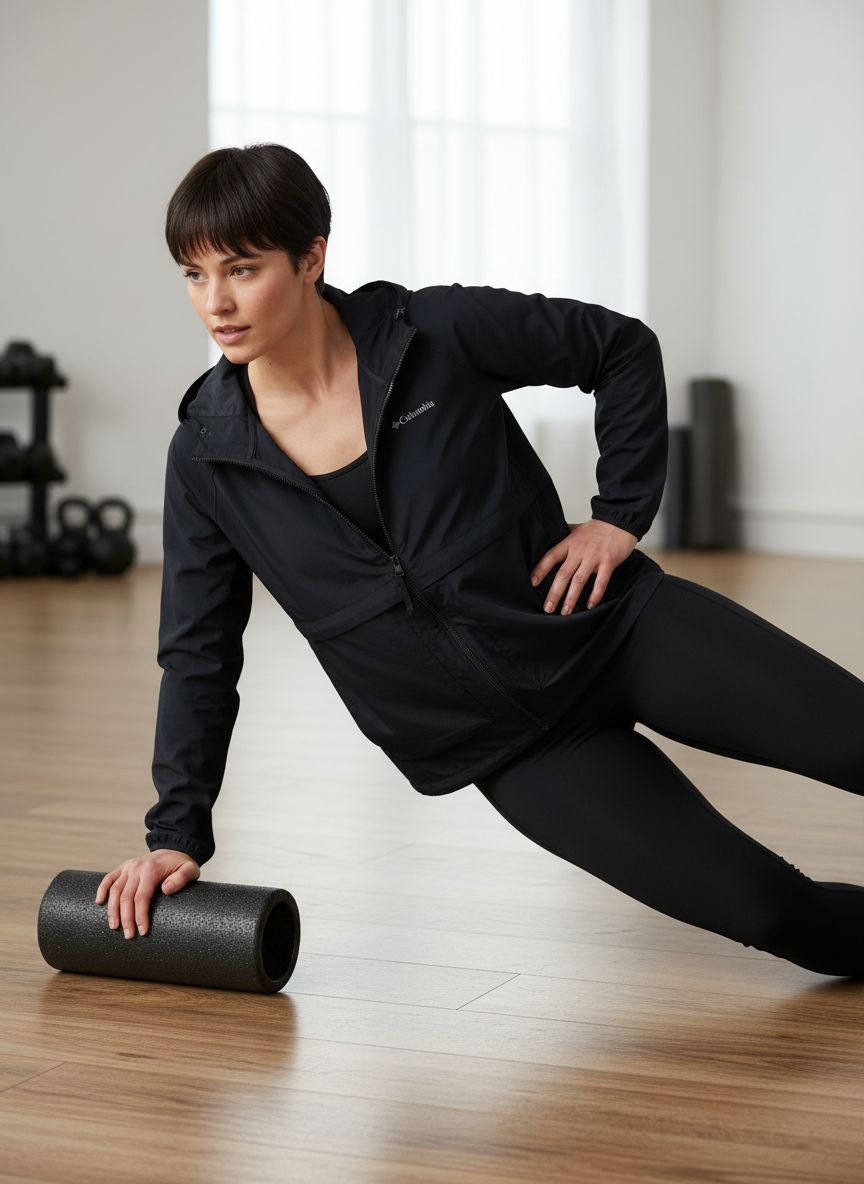
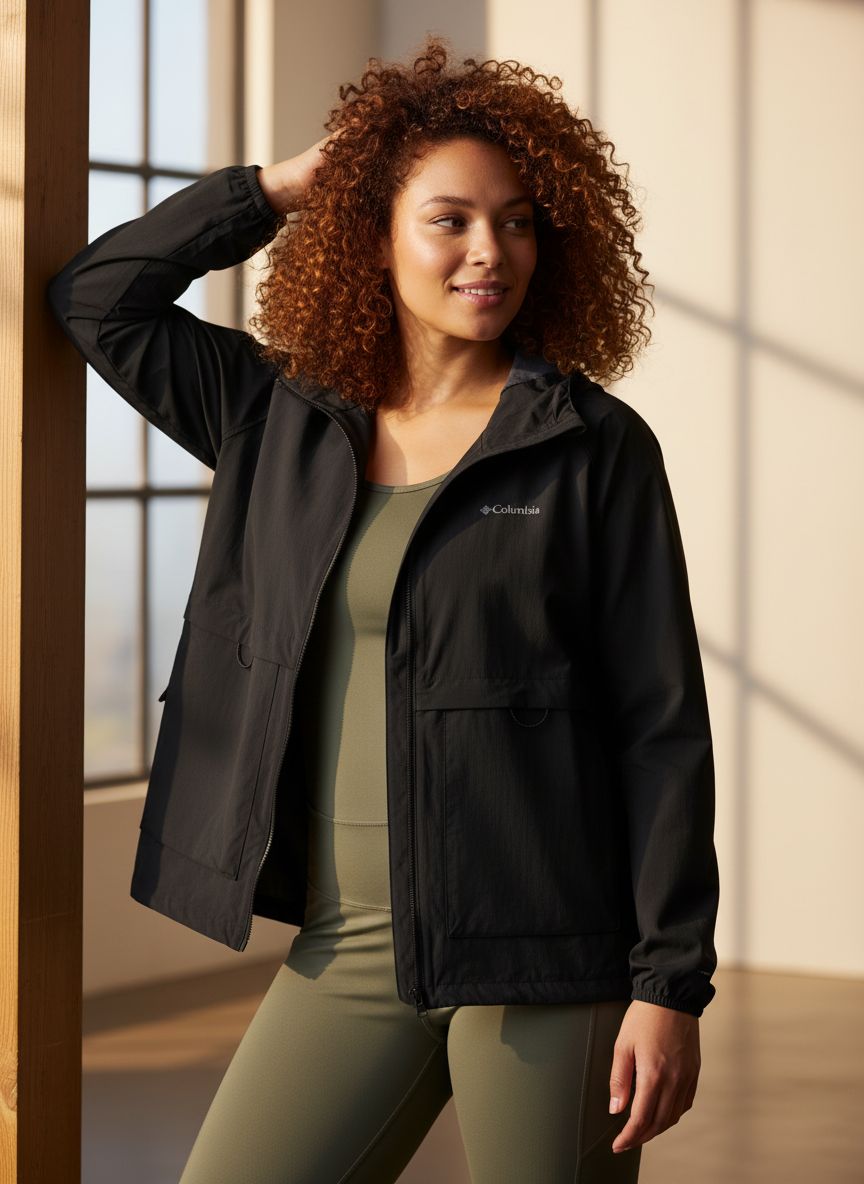
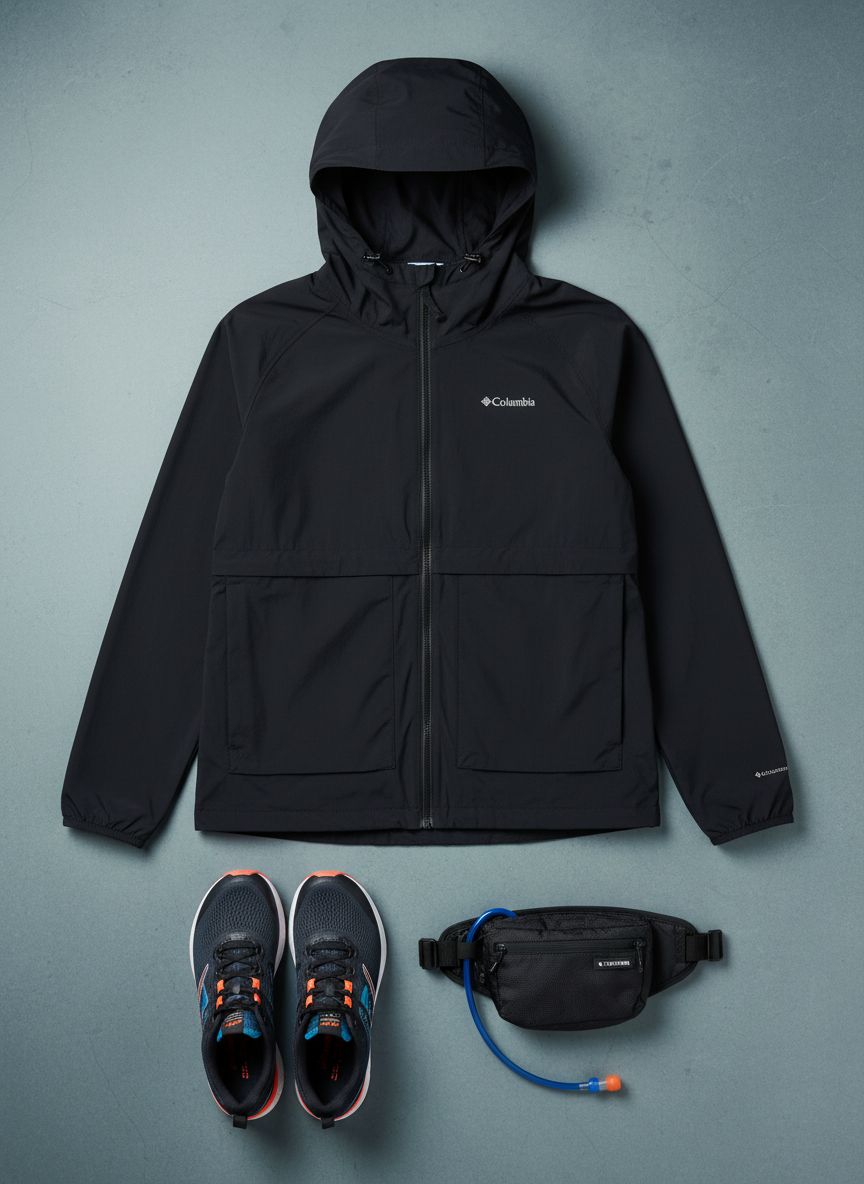
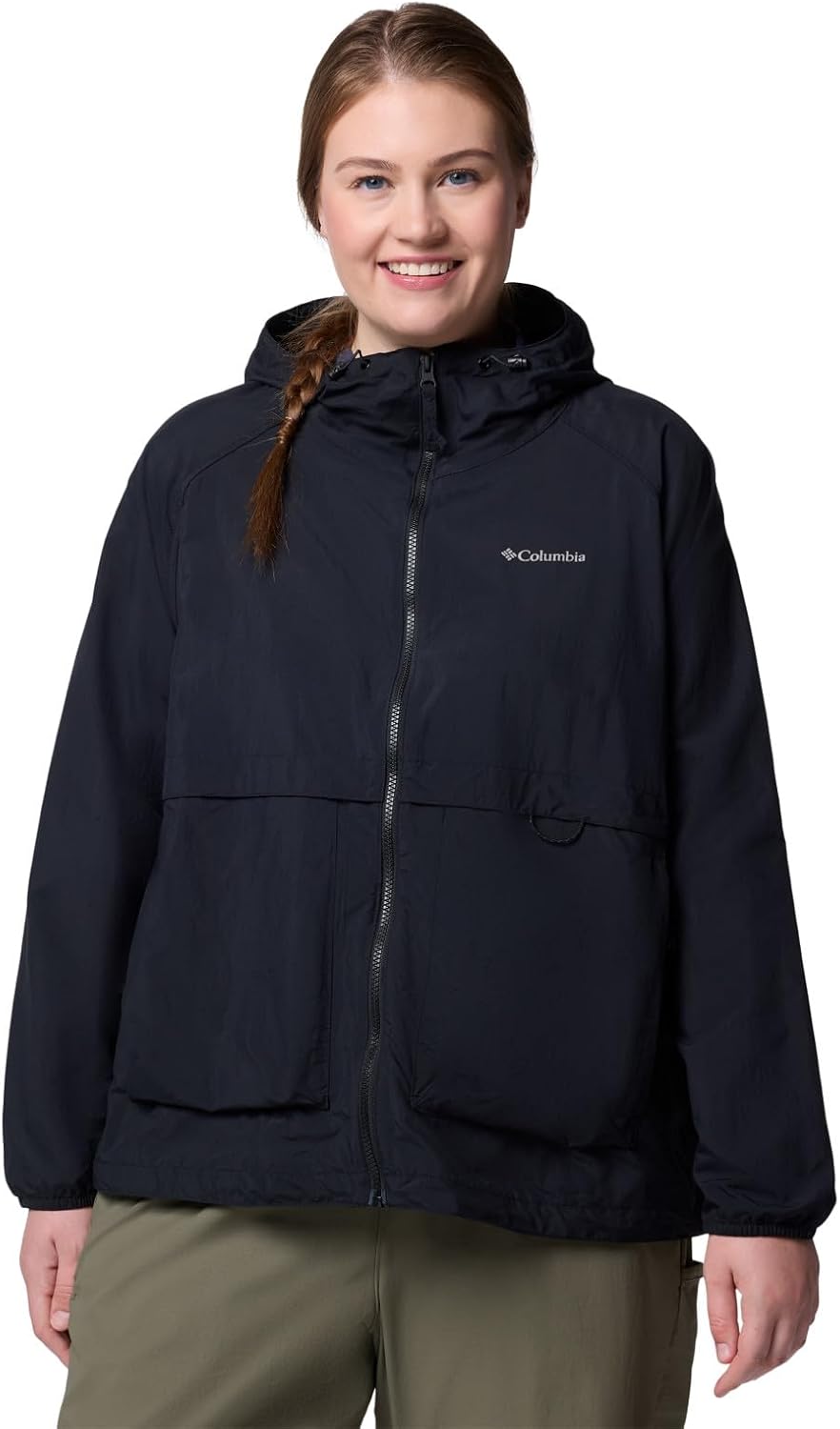
The colorway I tested is a clean, flat black with minimal branding, which suited my preference for kit that doesn’t look like a NASCAR sponsorship. It arrived looking more structured and refined than I expected at this price point. And that surprised me enough to take it seriously.
How It Actually Fits in Training
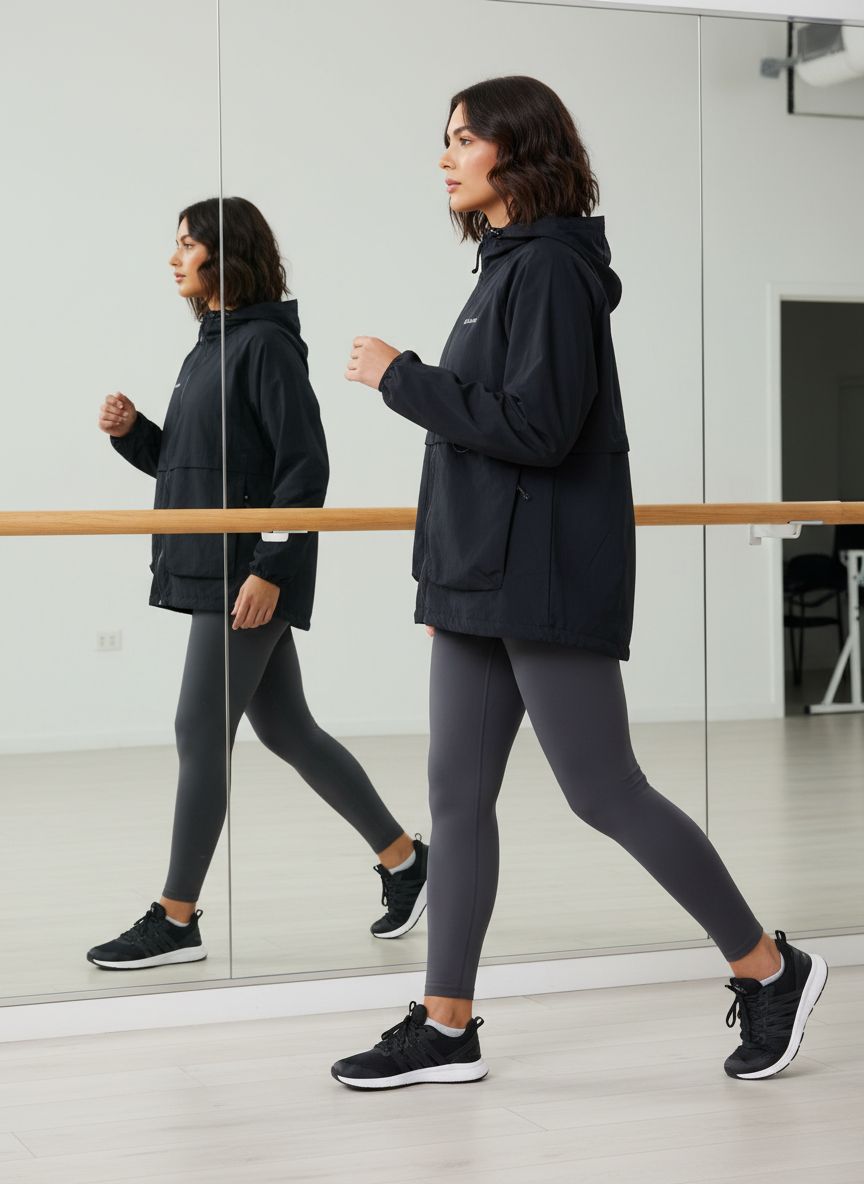
The Spire Valley runs in a fitted silhouette that sits close to the body without compression. On a run, that matters more than people give it credit for. Excess fabric bunches at the armpit, catches wind, and adds drag you don’t need on a tempo effort. This jacket moves with you. The nylon shell is lightweight enough that the sleeves don’t resist arm swing, and the hem stays put through stride without riding up to your ribcage. I tested it in a size medium (I’m 5’7″, 135 lbs, and usually hover between small and medium in athletic tops) and the fit landed exactly right.
“By the third mile I’d completely forgotten I was wearing a jacket. That’s not nothing — that’s the whole point.”
That said, the fitted cut is genuinely fitted. If you run warm and want to layer a midweight fleece underneath, you’ll feel it. There’s room for a base layer, a thin thermal long-sleeve even, but anything bulkier will compress your movement at the shoulders. The cuffs are cut snug, which I liked for keeping cold air out, but one seam along the left cuff sits slightly high and I noticed it on longer efforts. Not a dealbreaker. A mild awareness. Runner’s World’s gear coverage often calls out this exact trade-off in fitted running jackets: structure costs some flexibility, and here the trade leans toward structure.

The Sessions I Actually Wore It For
Session 1: 6-Mile Trail Run, Early Tuesday Morning
Temps were around 47 degrees with a steady northwest wind at the trailhead. I wore the Spire Valley over a moisture-wicking long-sleeve crew, paired with running tights, Brooks Cascadia 17s on my feet, and a thin buff around my neck I never ended up using. The jacket’s windproof nylon shell handled the exposed sections of trail without the billowing, snapping sensation you get from cheaper shell fabrics. By mile four, when I’d warmed up enough to unzip it halfway, the collar stayed open and didn’t flap in my face. Small detail. Appreciated detail.
Session 2: Saturday Neighborhood Run in Drizzle
Not a downpour. The kind of October drizzle that seems harmless until you’re twenty minutes in and your shoulders are soaked. The weather-shell construction held up here better than I expected for a jacket that isn’t marketed as waterproof. Surface moisture beaded and ran off the shoulders and upper back for the first half of the run. Around forty-five minutes in, some dampness came through at the seams, which tracks for a windbreaker in this tier. It’s weather-resistant, not waterproof. Know what you’re buying.
Session 3: Cold-Weather Commute and Coffee Run
Not every session needs to be a training session. I wore the Spire Valley on a Sunday morning walk to a coffee shop in 40-degree weather, which felt slightly absurd and then immediately felt correct. The fitted cut and clean crew-neck line reads more city-ready than a lot of technical running gear. It layered cleanly over a hoodie, looked intentional rather than athletic-by-accident, and kept the wind off my core during a longer-than-planned walk back. For an everyday outdoor top that pulls double duty between trail and street, this one earns its space in the rotation.
What Other People Are Saying
The Spire Valley carries a 4.7 rating across 98 reviews, which for a technical running jacket is notably consistent. Reviewers repeatedly flag the fit accuracy and wind protection as the standout qualities, with several specifically mentioning trail runs in the 40-to-55-degree range as the jacket’s sweet spot. A handful of reviews note the same cuff fit observation I made, so that’s not a personal quirk, it’s a pattern.
What the review set reveals is a jacket that’s earning trust from actual runners rather than casual buyers. When the complaints are minor and the praise is specific, that tells you something real about the product’s quality floor.
Who Should Skip It
If you run in heavy rain regularly, this is not your jacket. The weather-shell construction handles mist and light drizzle credibly, but it isn’t a waterproof layer, and positioning it as one will leave you disappointed and wet. Similarly, runners who run hot or tend toward heavier builds in the shoulder may find the fitted silhouette restrictive once the effort climbs. If you want to layer a significant midlayer underneath, size up or look elsewhere. And if you’re looking for a more substantial outdoor jacket for winter conditions below 30 degrees, the lightweight shell won’t provide enough insulation on its own. This jacket is a shoulder-season tool. Use it as one.
What It Replaces in My Kit Bag
I’d been running in an older half-zip pullover that had developed a persistent smell no amount of enzyme detergent could fix and a zipper that required a two-handed effort to close mid-run. Glamorous, I know. The Spire Valley replaced it immediately and without fanfare. What I noticed most was how much less I thought about my top layer during sessions, which sounds obvious but is actually the whole value proposition of well-designed outdoor performance gear. I also retired a thinner running vest that I’d been using as a wind layer. The Spire Valley does that job with more coverage and better structure.
FAQ
Does the Spire Valley run true to size?
Generally yes, with the caveat that the fitted cut means sizing up is the right call if you’re between sizes or plan to layer more than a base layer underneath. Columbia’s size chart is reliable for this style.
How does the fabric handle sweat and moisture management?
The nylon shell doesn’t have the same moisture-wicking behavior as a performance knit, so it’s best paired with a wicking base layer underneath. On its own, it manages light surface moisture well but isn’t engineered to pull sweat away from skin directly.
Can this double as a casual or travel layer?
Yes, and that’s one of its strongest arguments. The clean black colorway and crew neckline read as intentional streetwear as much as trail gear, which makes it a smart choice for travel days or post-run errands. For more styling inspiration across workout clothes that work beyond the gym, it’s worth browsing what editors are pairing in the activewear space right now.
Does the build quality hold up over time?
After roughly six weeks of consistent use including trail runs, commutes, and two machine washes, the shell shows no pilling, the zipper runs clean, and the DWR finish still repels light moisture at the shoulders. For what you’re paying, the level of finish and durability reads above what you’d expect in this tier. This is not a jacket that will fall apart after one season of honest use.
What’s the return and sizing policy?
Columbia offers standard returns through their site and major retailers. If you’re uncertain between sizes, order two and keep the one that fits at the shoulder, since the fitted cut means shoulder seam placement matters more than waist room here.
The Verdict
The next time I reach for the Spire Valley will probably be a Thursday, because Thursdays are my longer trail days and the forecast will almost certainly read exactly like that first Tuesday: cold, gray, and worth it. I’ll zip it to the collar, start cold, warm up fast, and forget I’m wearing it within twenty minutes. That’s the experience this jacket delivers consistently, and consistency is the thing I actually need from a piece of gear I’m putting on three or four times a week. If you’re building or refreshing a trail running kit and want a fitted running windbreaker that handles shoulder-season conditions without demanding a premium investment, this is a smart, well-executed pick. It’s not a statement piece. It’s better than that. It’s a piece that works. Explore our full editor-tested outdoor gear recommendations if you want to build out the rest of your kit with the same level of intention, or check out our curated gear gift ideas if you’re outfitting someone else for the trails this season. You can also browse Women’s Health’s fitness gear coverage for more context on what’s trending in performance outerwear right now. And if you want to compare bottoms to round out your trail kit, our outdoor pants picks are worth a look alongside this jacket. Buy it, run in it, forget you’re wearing it. That’s the whole review.
Every Angle
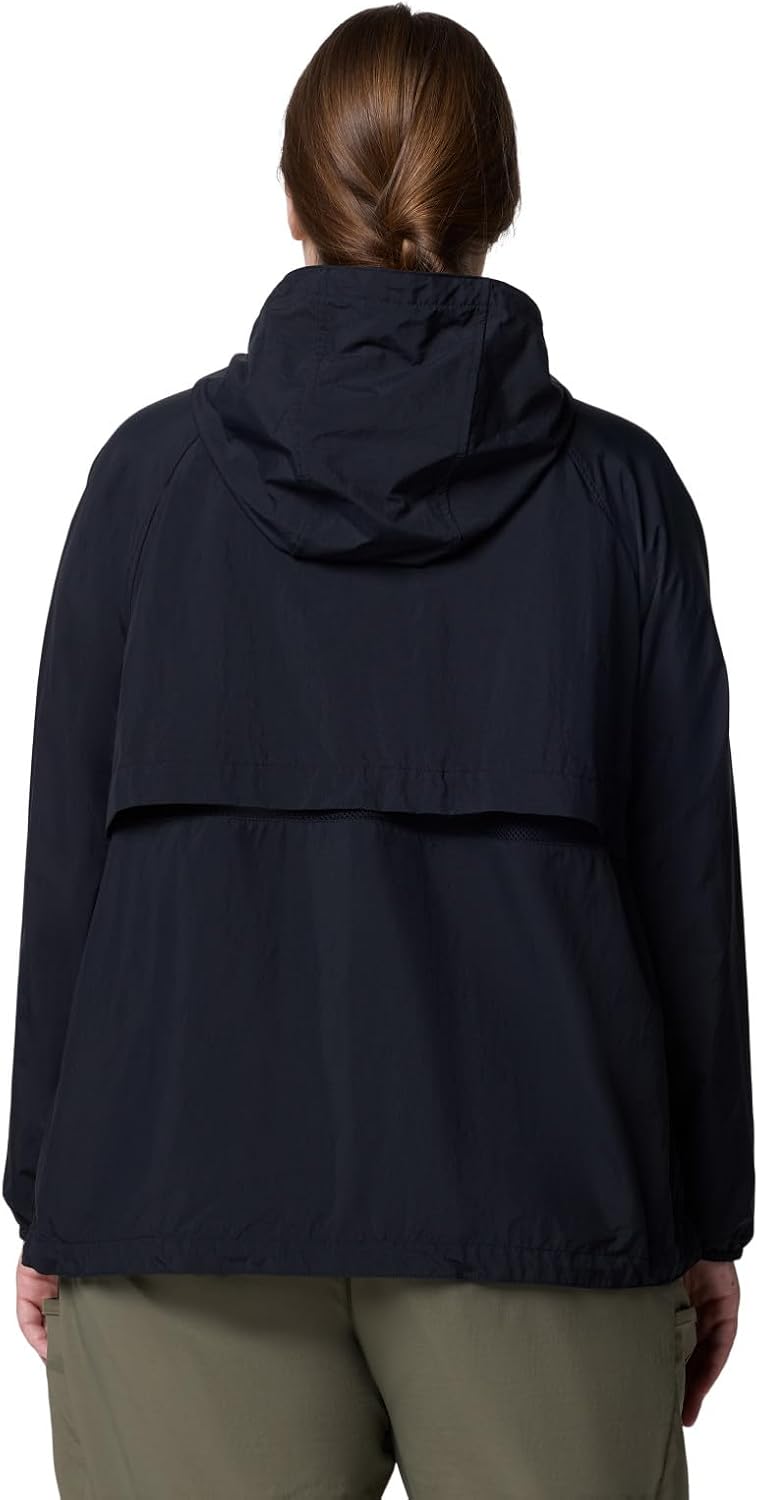
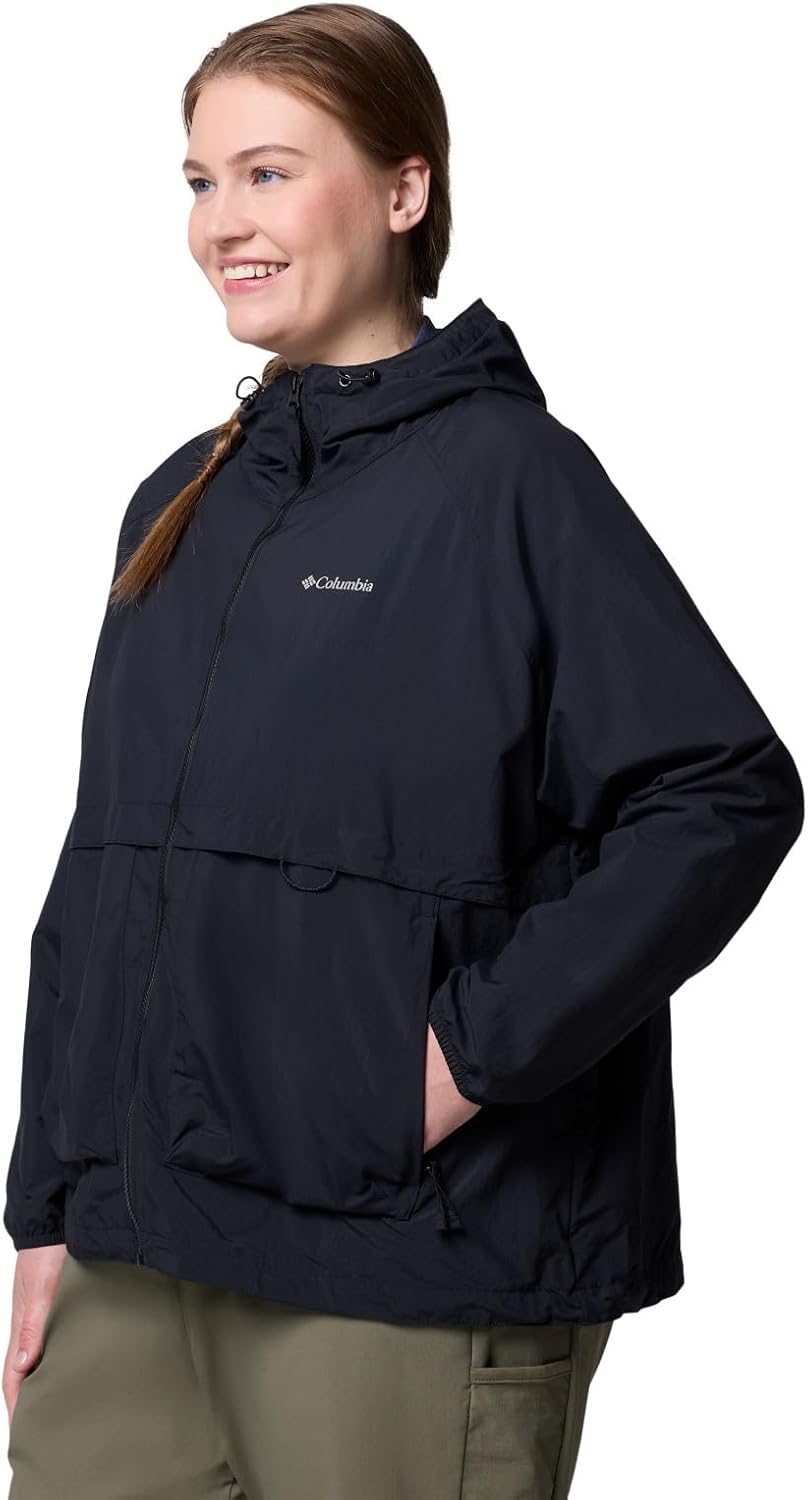
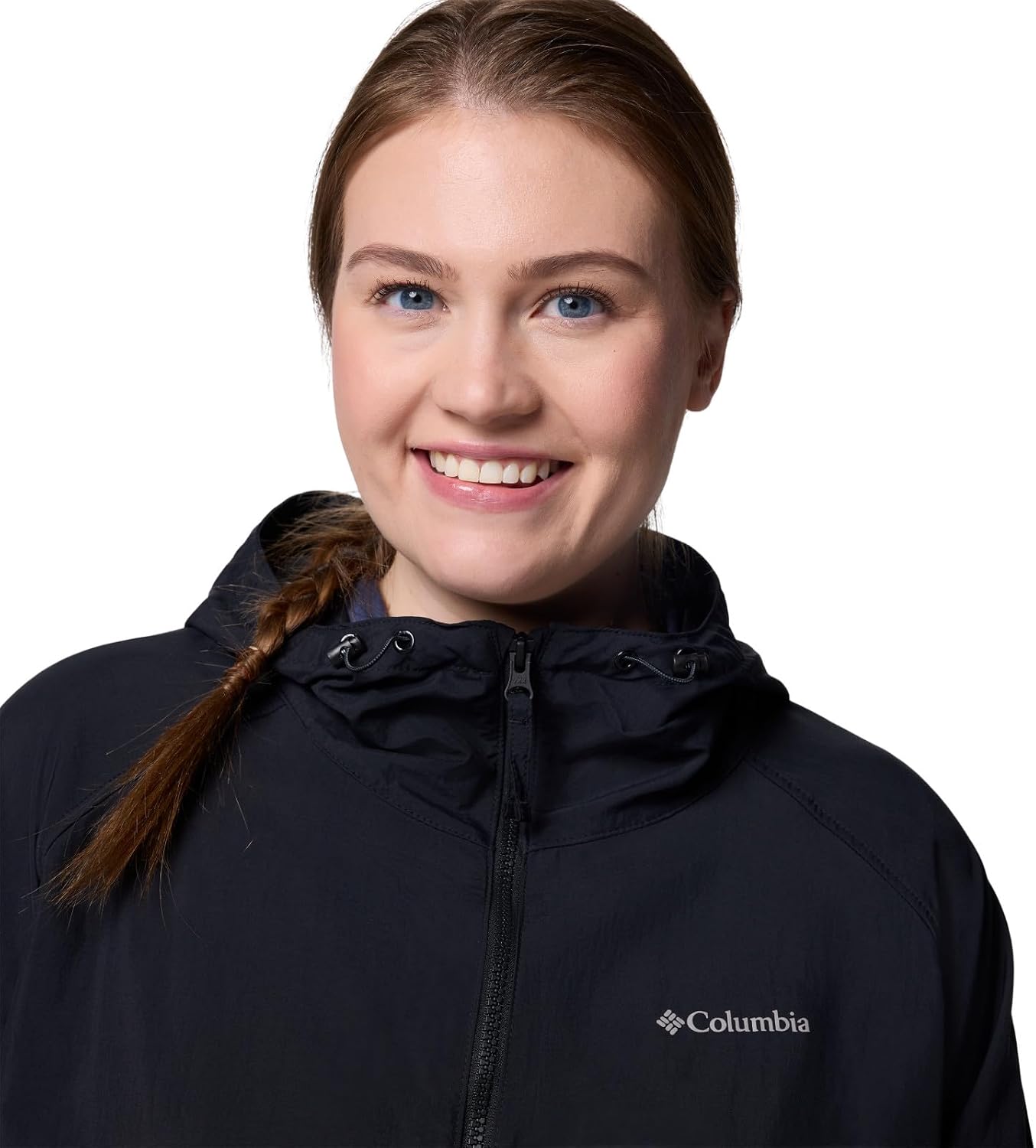
The piece as photographed for Amazon — front, side, back, detail.
As an Amazon Associate I earn from qualifying purchases.