Thermoball Lightweight Vest for Hiking: Honest Review
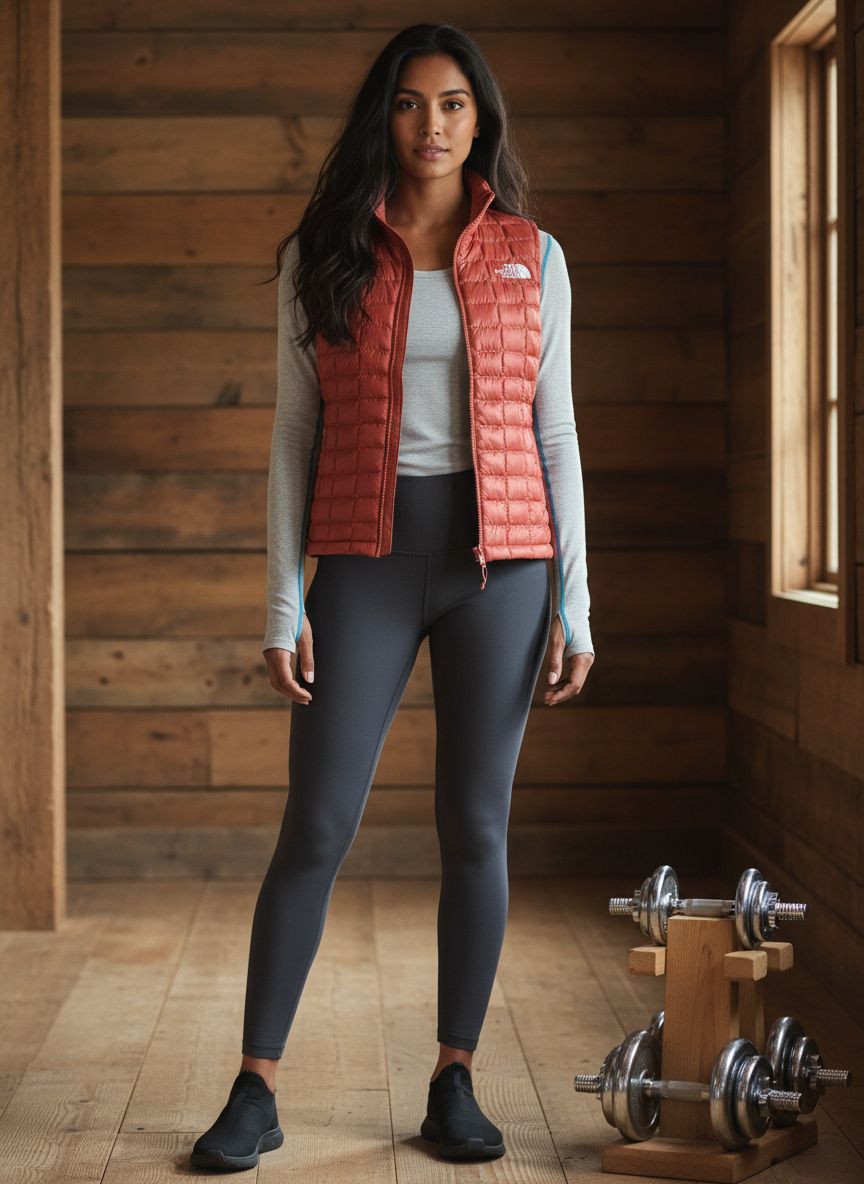
The North Face Women’s Thermoball Vest kept me warmer than I expected on a November trail loop where the temperature dropped ten degrees before I’d even hit the second mile marker.
The morning I first pulled on the The North Face Women’s Thermoball Vest, the sky was the particular shade of grey that means the season has officially shifted. Not raining. Not quite cold enough to justify a full shell. Just that threshold temperature where you stand at the trailhead overthinking your layers while everyone else is already moving. I zipped it up over a merino base layer, grabbed my pack, and started climbing. By the first switchback, I understood exactly what this vest was for. It fills the gap between “I’m fine” and “I’m actually freezing” better than almost anything I’ve packed on a transitional-season day.
The First Time I Wore It
I came across the Thermoball Vest while building out a layering system for outdoor tops and midlayers for shoulder-season hiking. I’d been eyeing the Thermoball line for a while because of the synthetic insulation story, which promises loft and warmth retention even when wet, a claim that matters to me personally because I run warm, sweat early, and still somehow manage to get cold the second I stop moving. The vest silhouette specifically caught my attention because I wanted core warmth without the arm restriction I get from a full puffer jacket on technical terrain.
I ordered it in a neutral colorway that I knew would layer under anything, and when the package arrived and I shook it out, it felt lighter than I expected for something rated for fall and winter use. That lightness is either a feature or a red flag, depending on how you use it. I was about to find out which.
How It Actually Fits in Training
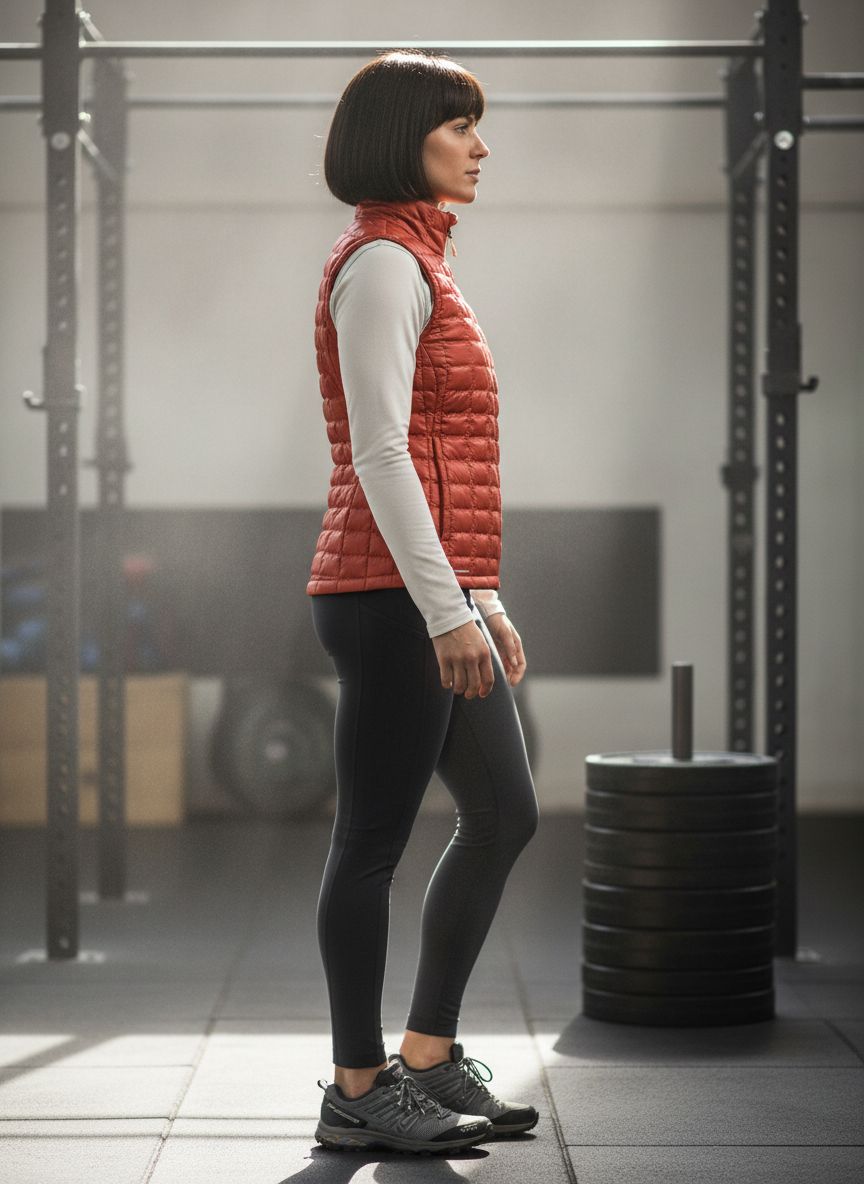
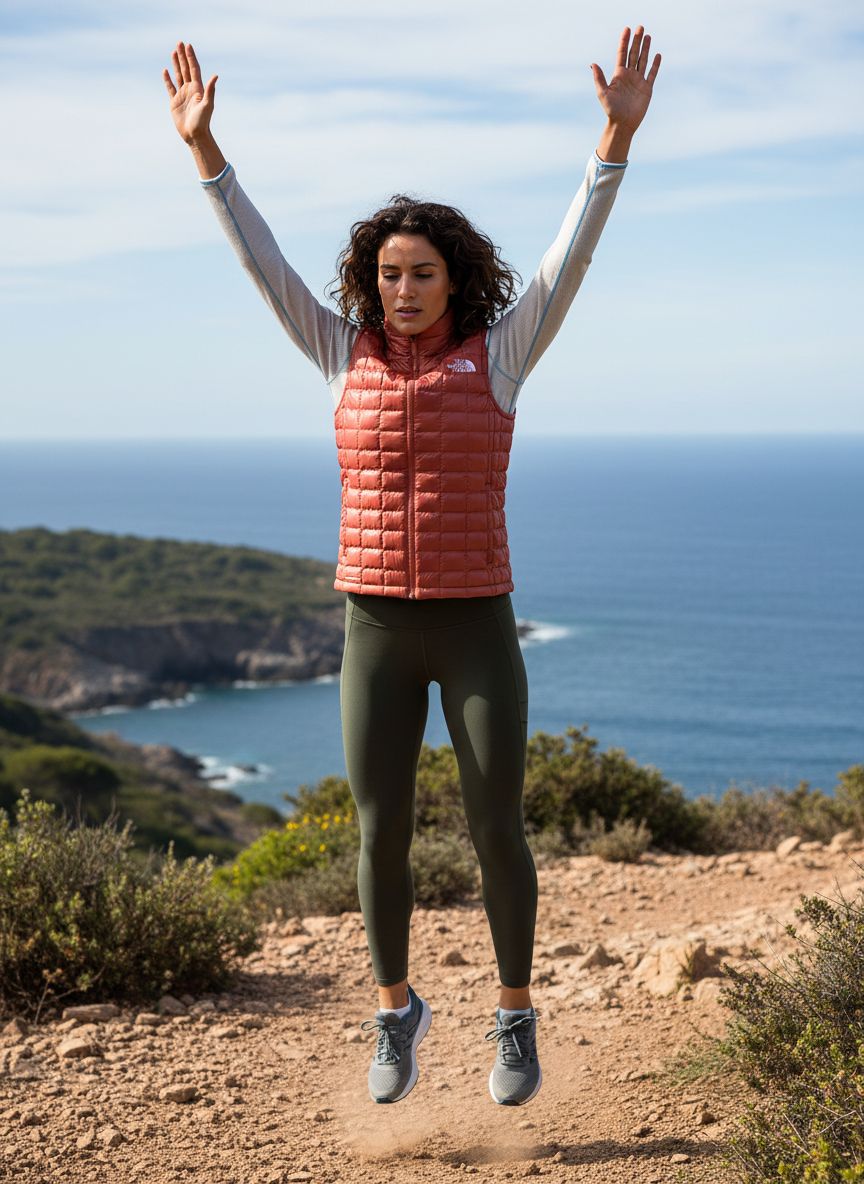
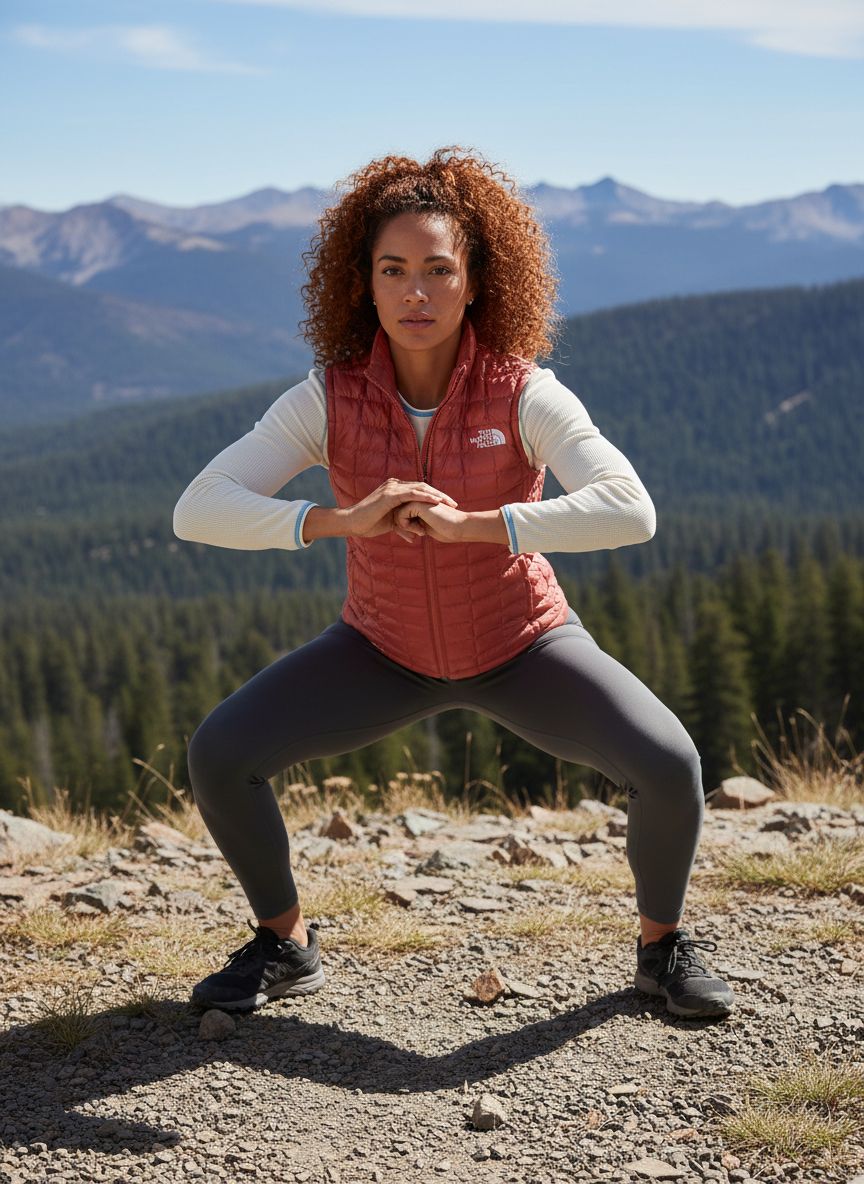
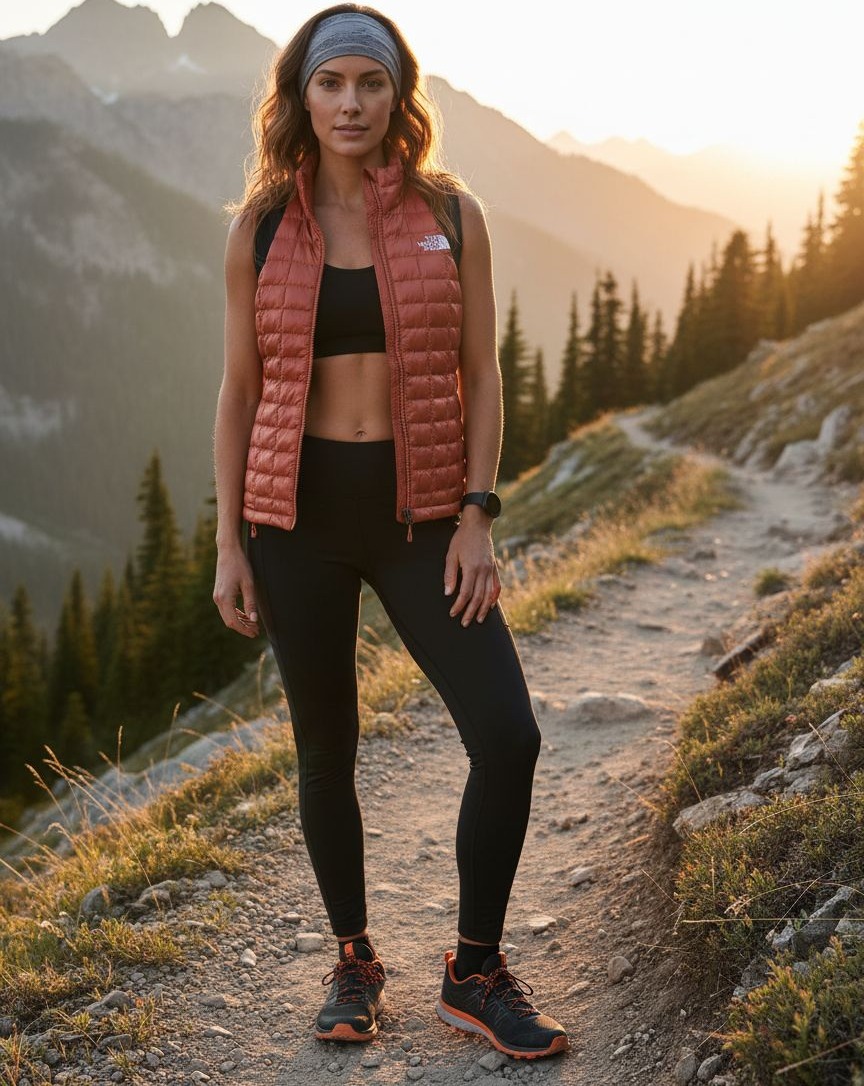
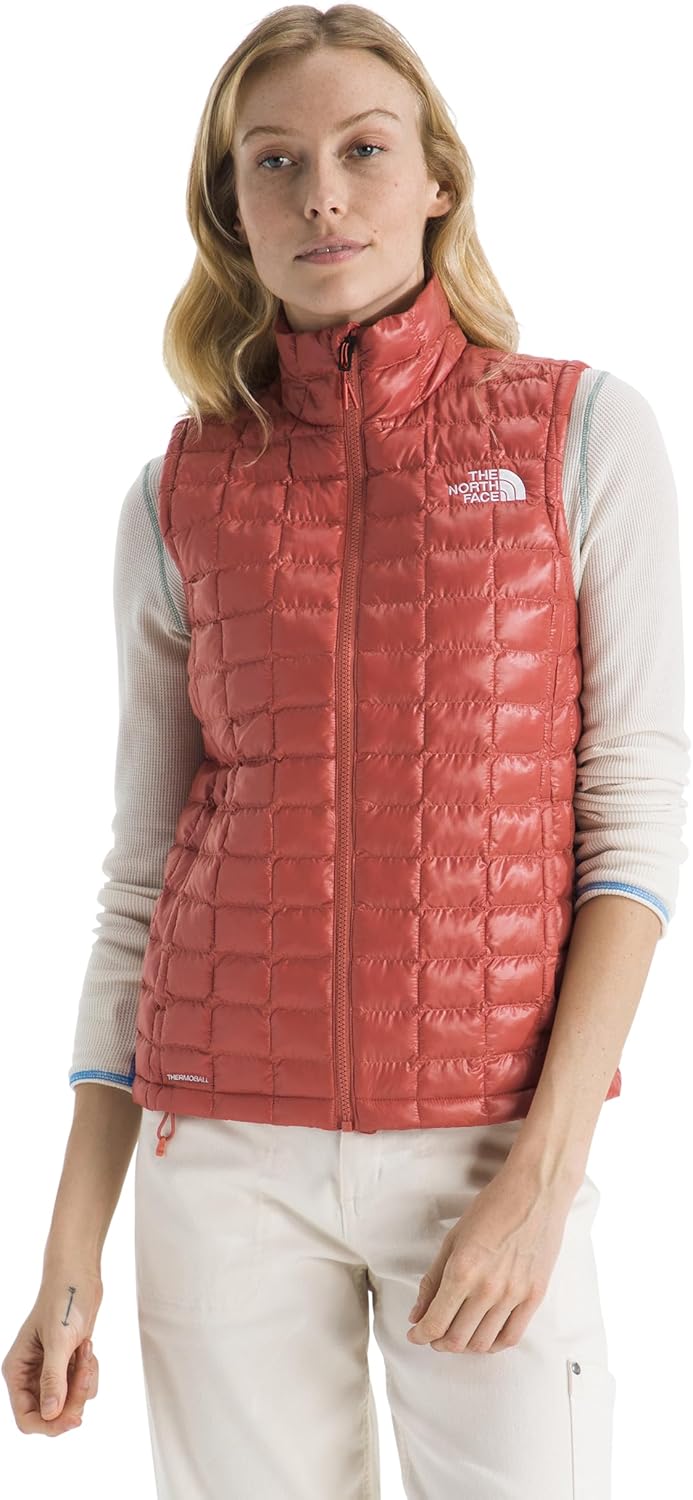
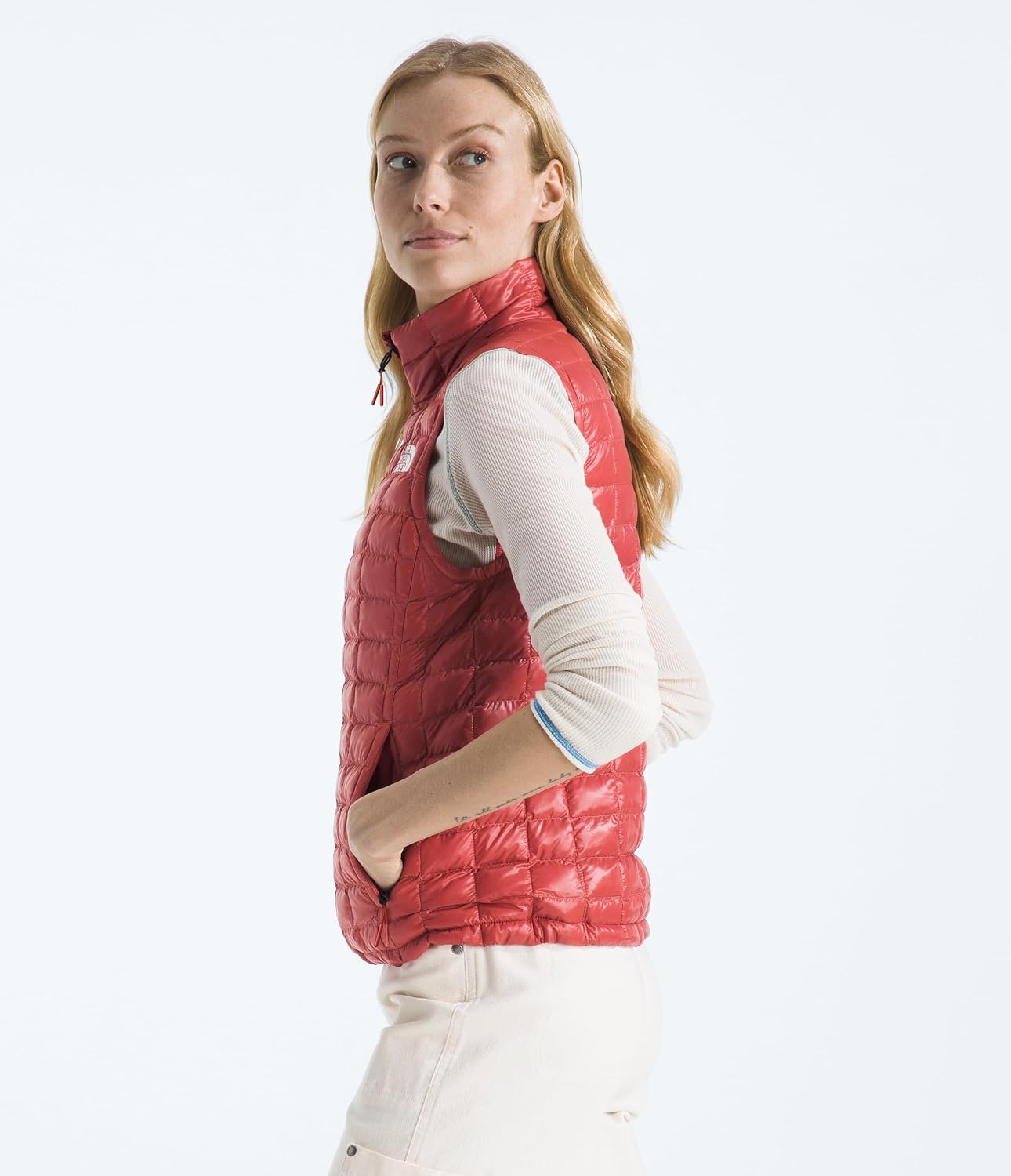
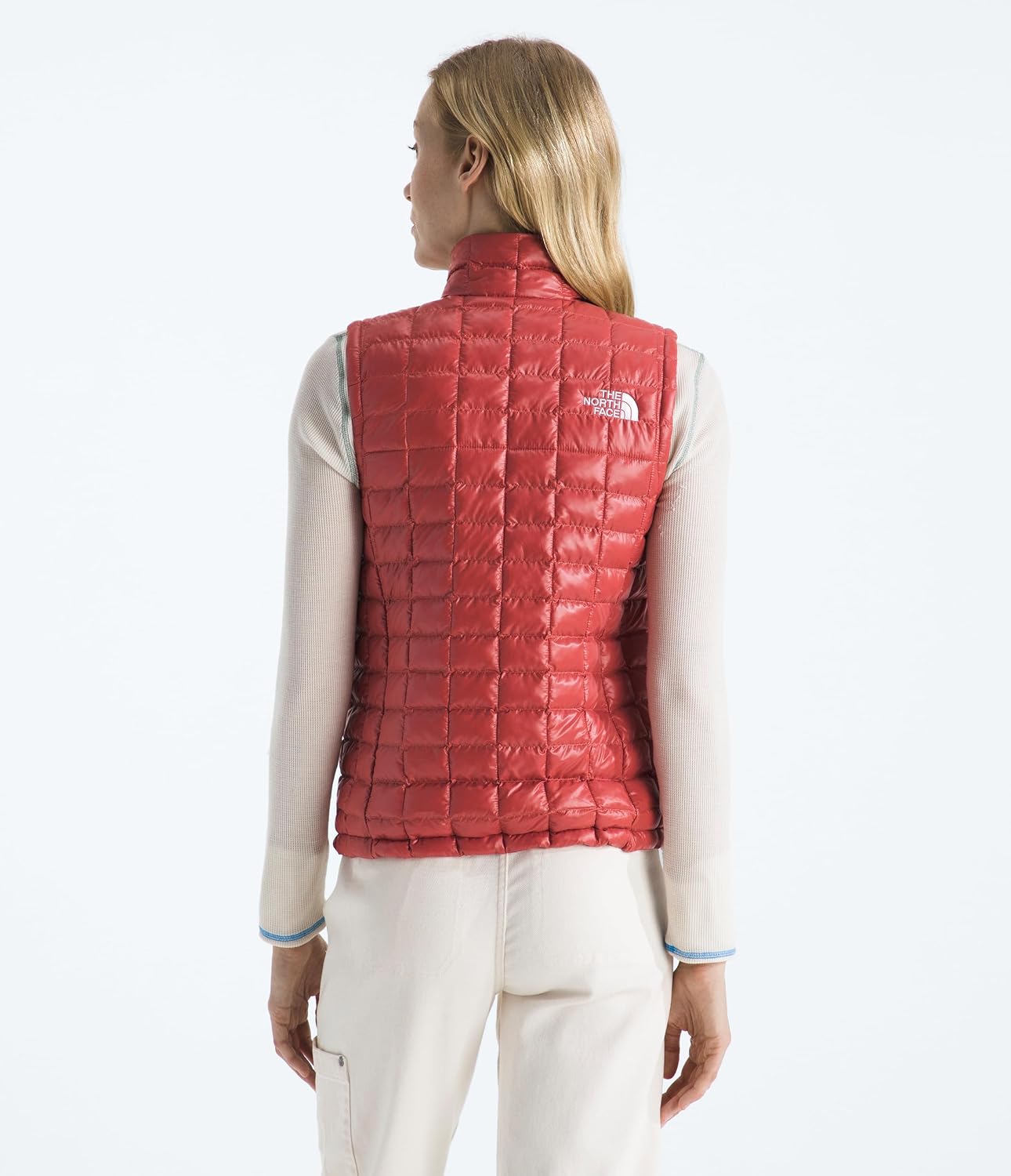
The fit profile here is genuinely fitted without being compressive. There’s enough room across the chest to layer a midweight long-sleeve underneath without the vest pulling or bunching at the zipper, but it doesn’t hang like a puffer balloon either. The sleeveless cut frees up your shoulders for full range of motion, which matters when you’re scrambling over rocks or swinging trekking poles. The hem hits just below the hip, which is exactly right for coverage without adding bulk under a shell.
“This is the vest you reach for when a jacket feels like too much but a fleece alone clearly isn’t enough.”
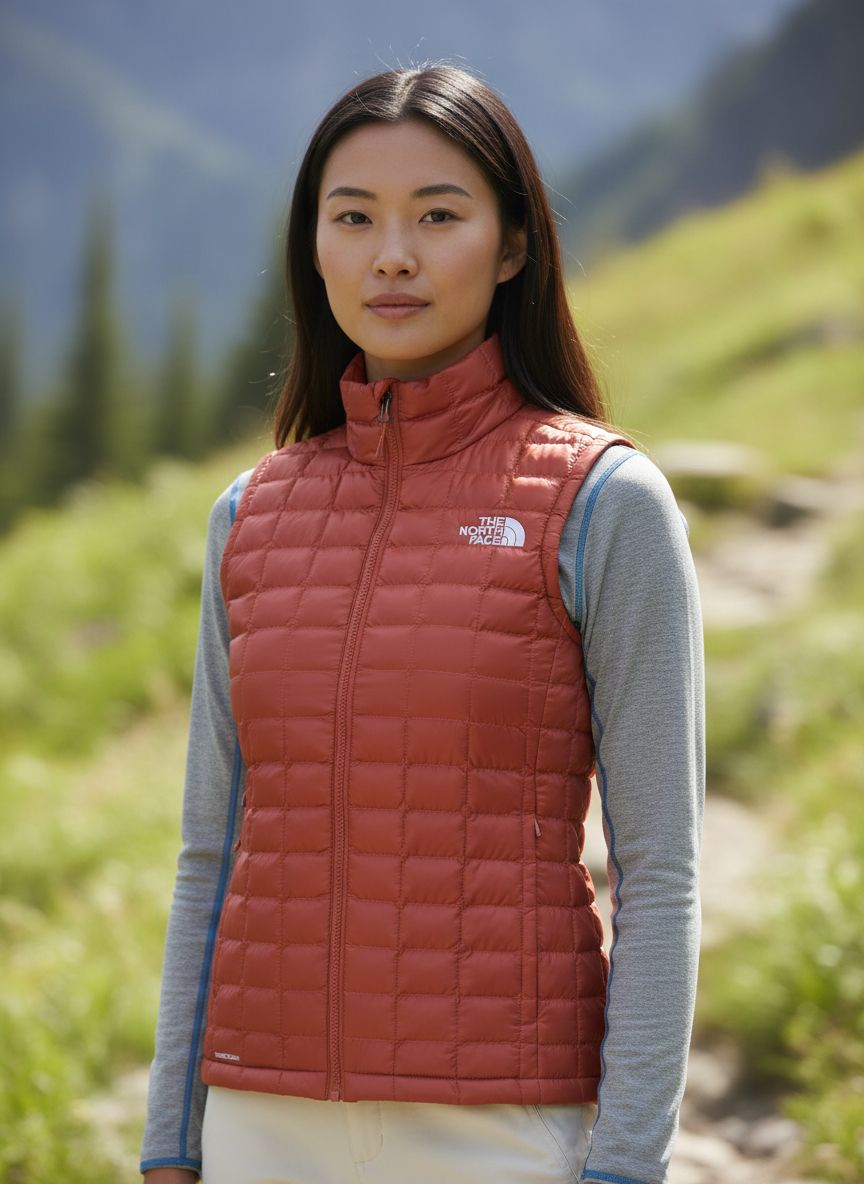
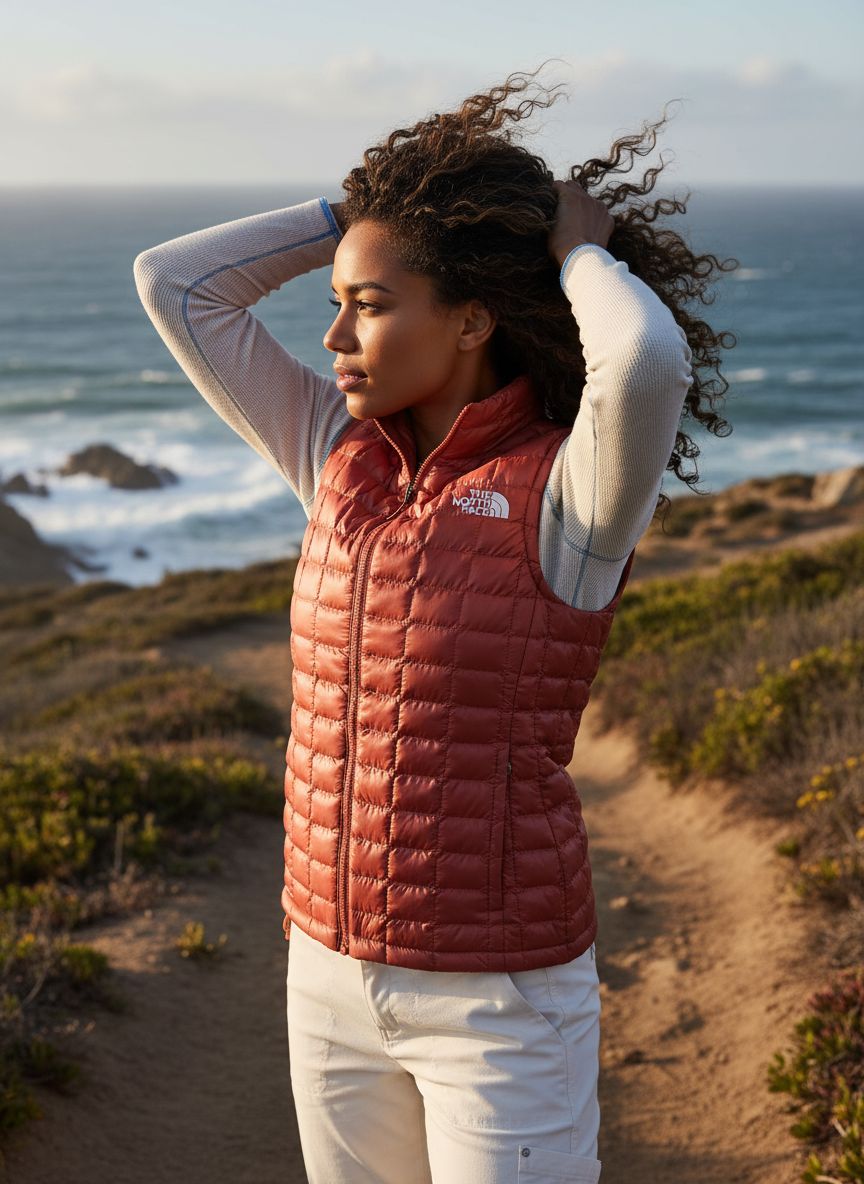
I noticed the collar sits high enough to buffer some neck wind without being stiff or scratchy, a small detail that adds up on a two-hour hike. One honest note: the water-repellent finish does bead rain initially, but in a sustained drizzle it starts to feel damp at the shoulder seams faster than I’d like. For light precipitation it holds. For a proper downpour, you’ll want your shell on top. According to Outside’s comprehensive outdoor gear coverage, that’s the correct expectation for DWR-treated insulated vests across the category, not a Thermoball-specific limitation.
The Sessions I Actually Wore It For
Session 1: November Trail Hike, Suburban Preserve, 7 a.m.
The temperature was 41 degrees at the car and I had the vest over a lightweight thermal base layer. No shell, no gloves yet. The Thermoball’s synthetic loft creates warmth that’s noticeably immediate, not the slow build you get from wool. By mile one I was comfortable. By mile two, when the trail dropped into a shaded ravine and the wind picked up off the creek, I was still comfortable. I finished four miles without ever wishing for a heavier layer, which is the specific metric I care about on this kind of outing.
Session 2: Outdoor Farmers Market, Casual Saturday Morning
This is where the athleisure angle plays out. I wore the vest over a ribbed turtleneck with straight-leg pants and trail runners, and it read as a deliberate outfit rather than “I grabbed whatever was near the door.” The fitted silhouette does a lot of work here. It looks like something you chose on purpose. I spent two hours outside browsing stalls in 46-degree weather, and the vest functioned as a standalone outer layer without me wishing for a coat. That’s a specific kind of win for a piece that’s technically a midlayer.
Session 3: Pre-Dawn Run Warm-Up, Then Packed Into a Vest
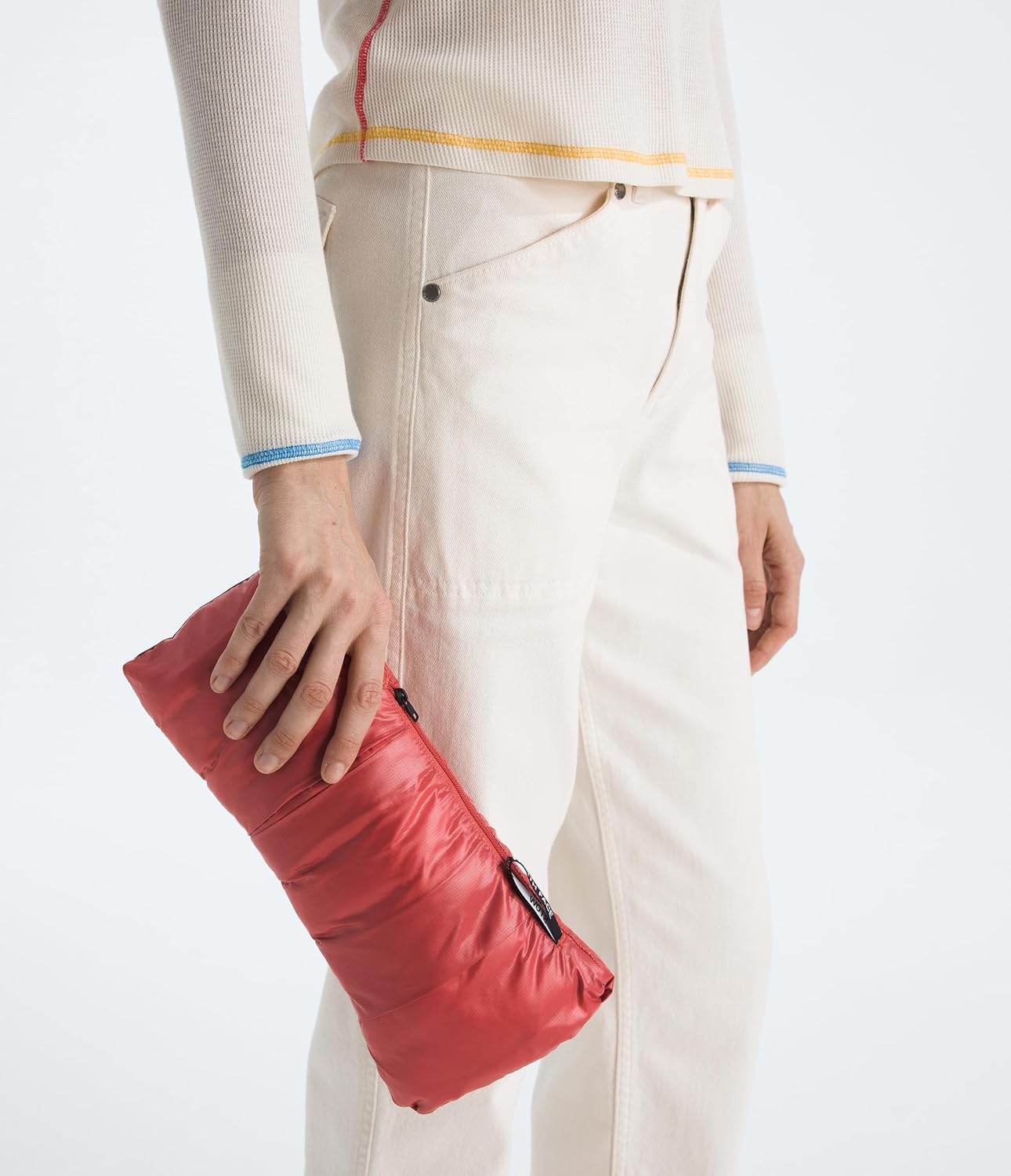
I wanted to test the packability story because The North Face markets it. I stuffed the vest into its own chest pocket, which compresses it to roughly the size of a folded paperback. I tucked it into a running vest, did a six-mile road run in a light long-sleeve, then pulled the Thermoball back on at the end when I was cooling down and standing around stretching in the cold. The pack-and-pull-out experience is genuinely seamless, and the insulation re-lofts immediately. No awkward clumping, no wrinkles that make it look like you slept in it.
What Other People Are Saying
The product currently holds a 4.6 rating across 38 reviews, which for a vest at this level of finish is a telling signal. A high average with a relatively modest review count usually means the people who found it are specifically the people it was built for, not a broad randomized sample. The complaints that surface in lower ratings tend to cluster around sizing expectations, specifically that the fitted profile reads smaller than anticipated, which aligns with my own recommendation to size up if you plan to layer heavily underneath.
When a piece this focused earns near-universal approval from outdoor-oriented buyers, it usually means the design brief was clear and the execution matched it. The Thermoball Vest appears to have both.
Who Should Skip It
If your training skews toward high-output cardio in sustained cold, this vest will likely feel like too much insulation too fast. I run warm under exertion, and even on a 41-degree morning I was unzipping by mile three. Someone who runs hot at any temperature will find it cloying. Similarly, if you’re shopping for a technical alpine layer that needs to handle real precipitation, a softshell or hardshell jacket is the correct answer. The Women’s Health fitness and gear guides consistently recommend separating your “active output” layers from your “static warmth” layers for exactly this reason.
Also worth noting: if you prefer a relaxed or oversized outerwear silhouette, the fitted cut here will feel intentionally snug. It’s not a drape piece. It’s built to layer under a shell, and that purpose shapes every dimension of the fit.
What It Replaces in My Kit Bag
I had a fleece vest I’d been wearing for years as my transitional layer, reliable but bulky, and it had gotten to the point where it barely fit under a shell without pinching at the shoulders. The Thermoball replaced it immediately and without any nostalgia. The packability alone justified the swap. The old fleece took up a third of my daypack; this vest disappears into a side pocket. For anyone looking to round out a shoulder-season system, you can explore our full outdoor jacket and outerwear category to build a complete layering kit around a piece like this.
I’ve also started reaching for it on days when I would have previously layered a cardigan over a base layer for non-outdoor activities. It’s become the thing I grab when I need to be warm for two hours and mobile for the other two.
FAQ
Does the fitted cut work for layering underneath a shell jacket?
Yes, and it’s clearly designed for exactly that. The slim profile stays tucked and smooth under a shell without bunching at the back or shoulders. Size up if you’re between sizes and plan to layer a thick base underneath.
How does the Thermoball insulation handle sweat or light rain?
The synthetic fill retains meaningful warmth even when damp, which is the core advantage over down in active outdoor contexts. The water-repellent shell handles light precipitation well, though extended rain will eventually work through the DWR coating at seams.
Can I wear this as a standalone outer layer or only as a midpiece?
In temperatures ranging from the mid-30s to mid-50s with low wind, it works comfortably as a standalone. Below that, or in sustained wind, you’ll want a shell over it. It’s genuinely versatile across that range in a way that a heavier puffer is not.
Does the build quality match what you’d expect from The North Face at this price point?
The finishing, seam construction, and zipper hardware all feel consistent with what the brand delivers at this tier. After multiple washes and consistent pack-and-unpack use, the insulation loft has held without notable compression or pilling.
How does sizing run, and what’s the return process if it doesn’t fit?
The vest runs true to size on the slim side, consistent with the fitted profile. If you plan to wear it over anything bulkier than a lightweight thermal, size up one. Most retailers carrying The North Face offer standard return windows for unworn or defective items, so check your specific retailer’s policy before ordering.
The Verdict
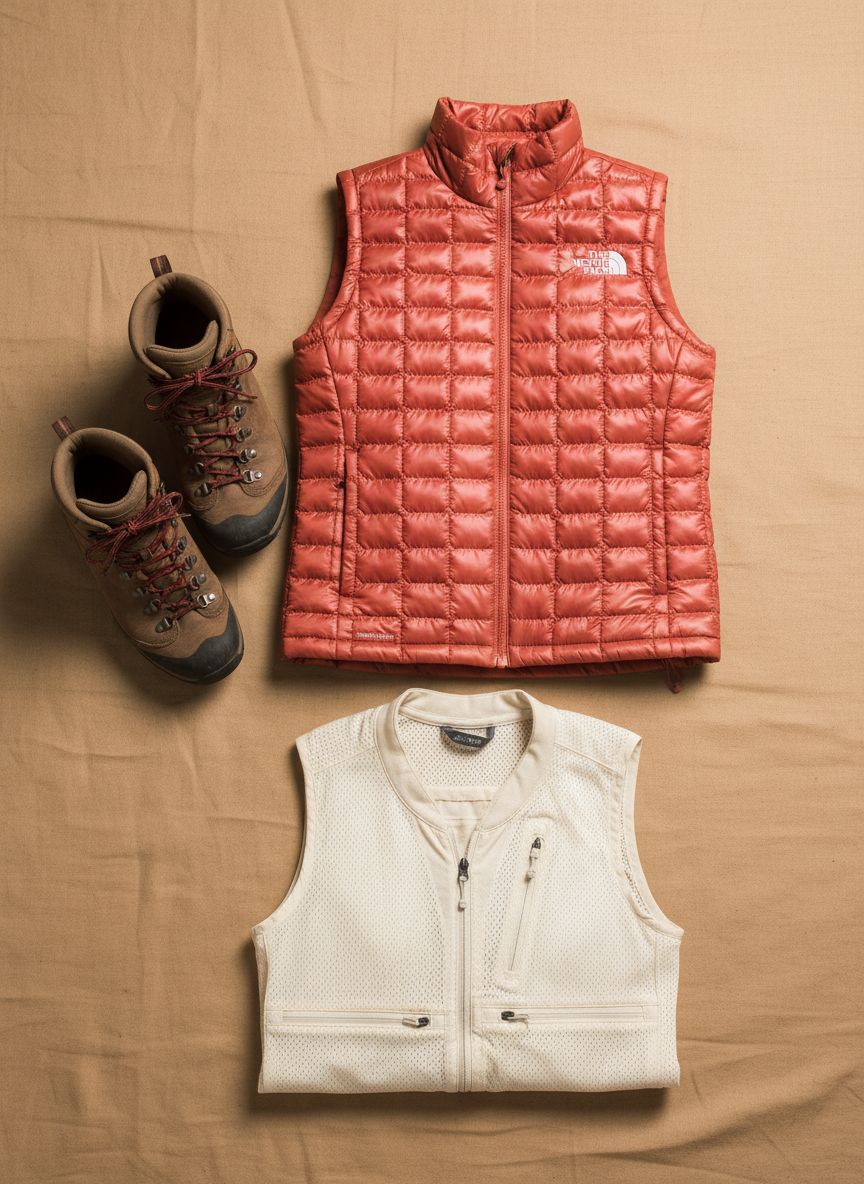
I’ll wear this vest again next week. Probably the week after. I already know which mornings it belongs to: the ones where the forecast says 44 degrees and partly cloudy and I’m trying to figure out what that actually means in terms of what to put on my body. The North Face Thermoball Vest answers that question without requiring any further deliberation. It’s light enough to forget you’re wearing it at peak effort, warm enough to matter when you stop moving, and fitted well enough to layer under a shell without fighting your own clothes. For anyone building out a layered outdoor kit for fall and spring conditions, this is the kind of piece that quietly handles the hardest slot to fill. If you want to compare it against other options we’ve tested, our editor’s top activewear picks have the full roundup. And if you’re shopping for seasonal gift ideas for an outdoor-oriented person in your life, it’s worth checking our outdoor gear gift guide as well.
The The North Face Women’s Thermoball Vest is also worth stacking alongside our picks in the outdoor pants category if you’re building a full transitional-season system. For what you’re paying, the warmth-to-weight ratio, the packability, and the fit execution all read above what the price point typically delivers in this category. Buy it, layer it, stop overthinking your morning kit.
Every Angle
The piece as photographed for Amazon — front, side, back, detail.
As an Amazon Associate I earn from qualifying purchases.